Gone are the days when pitching a tent meant placing a centre pole, spreading a breathable fabric over it, and staking all the corners of that fabric into the ground to give it a stable structure.
Now, many tents come in different shapes and sizes with features designed for specific purposes.
In this article, we discuss the different types of tents to choose from based on your camping needs.
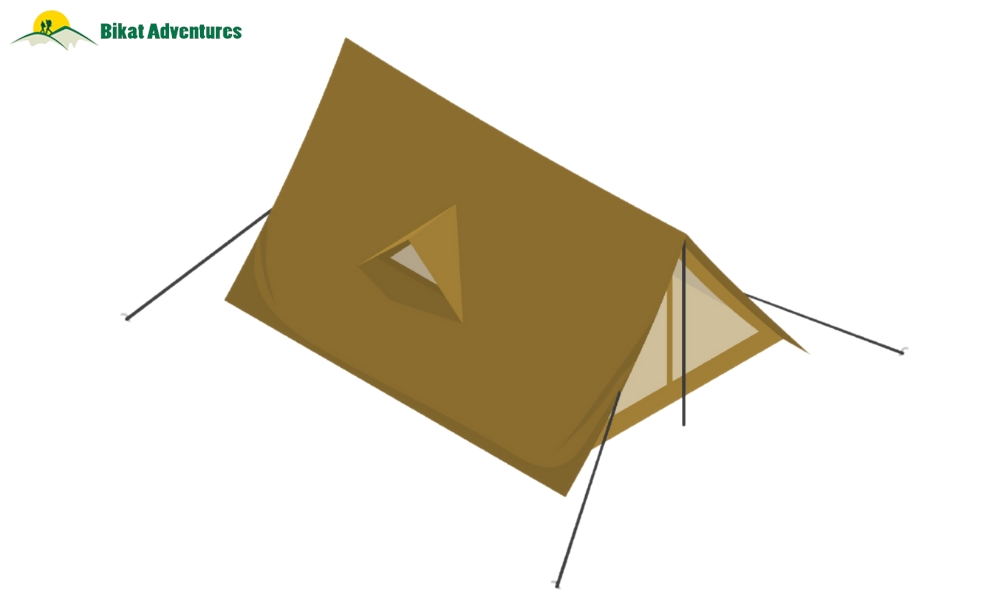
1) A-frame/ Ridge tent
This tent, when pitched, looks like the letter A and is popular due to its simple design. Earlier, it was made of canvas and would come with wooden or metal poles, but the modern options in the Ridge tent are lighter. Though it's easy to set up compared to other types, this tent lacks space and becomes heavy when packed. They are ideal for fixed camping.
2) Dome tent
The dome tent is the most common type of tent. It is easily distinguishable by its design. It comes with two poles, crisscrossed at a point, forming two semi-circles running across the tent body. This is what gives the tent its dome shape.
Dome tents come in a range of different sizes that can accommodate two to eight people. Lighter than the other options, dome tents have a decent amount of space, are more breathable, and are easy to pitch.

3) Pop-up tent
Yes, you guessed it right! These tents can be set up instantly. They are super easy and quick to put up and take down. They are spring-loaded and pop into shape as soon as they get released from their bag. Pop-up tents are simple tents that are inexpensive and lightweight, making them ideal for summer camping. These, however, are not suitable for extreme temperatures and geographies. Pop-up tents can accommodate anywhere between 1-6 people and are ideal for large groups.

4) Tunnel tent
Tunnel tents are similar to a dome tent. They are longer and cylindrical. But unlike dome tents, the poles on a tunnel tent run on the exterior of the tent body. Ropes that run from attachment points outside of the tent body are staked into the ground to provide the tent with more stability.
Tunnel tents provide lots of headroom and livable space for larger groups and families, and when pitched smartly, they can withstand bad weather. However, they are quite heavy and bulky when packed, making them unsuitable for carrying on foot. They would be more suited for car camping.

5) Geodesic tent
An improved version of the dome tent, geodesic tents are more robust and capable of standing up to different elements of weather and geography. They come with more poles that cross each other, which increases the stability of the tent.
Since geodesic tents focus more on stability and strength, they are excellent for camping in the wilderness and extreme weather conditions. On the size front, they can accommodate four people at most. Being of higher quality, they are also priced higher.

6) Cabin tent
Cabin tents are a perfect choice when looking for a reasonably cheap tent for family camping.
They are composed of aluminium poles that form a frame that looks like a cabin when fit together and are walled with waterproof polyester, nylon, or canvas. Cabin tents can give livable space and headroom, but aren’t of good quality and cannot withstand bad weather.

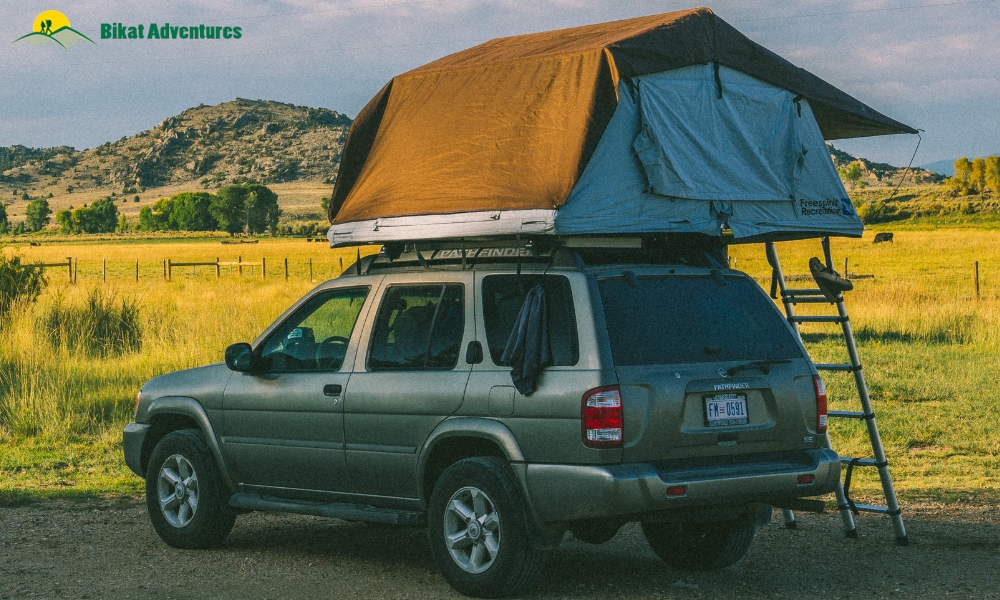
7) Car-top/ Roof-top tent
They are cabin-shaped tents that can be popped up and folded down with speed and ease. Designed for people who are road tripping in their cars, car-top tents are the most exciting way to camp. They come with a ladder to access the tent. Most cars have roof bars that can handle the full tent of campers on top of them.
8) Bivvy tent/Bivouac tent
Bivvy tents were originally designed as emergency shelters. They are minimalistic and provide an additional layer of protection at most from the external environment. They are small when packed and come in a tunnel or ridge shape. These tents are ideal for wild campers and hikers who do not want to carry much weight and are willing to risk some weather and geographical challenges.

9) Backpacking Tent
Backpacking tents are smaller than all the other options and lighter in weight. They come with fewer poles and have a limited capacity to accommodate one or two people. They usually come in geodesic or tunnel shape. Easy to pitch and take down, this comes in handy when travelling for multiple days.

That brings us to the end of this article. The tents we have mentioned above broadly outline the different types of tents available for camping. There are a few more types of tents that we have not included in the article like shower tents, dining tents and toilet tents which differ from each other in the activity for which they are used.
Now that we have familiarized ourselves with the different types of tents, take a look at the Parts of a backpacking tent and the purposes they serve.