Video cover

Gurez Valley Trek

Easy

Gurez Valley Trek

BRS 3
Max Altitude
Kashmir
7 Days
38 Km
Max 15
17700 + 5% GST
Srinagar to Srinagar

Add ons


Available Batches

Available Batches

Grade:Easy
Location: Kashmir
Altitude:3900 m
Duration:7 Days

Read more

Brief Itinerary

Drive from Srinagar (1,580M) to Dawar (2,400M)
8 Km
4 Hours
3546m
Dawar (2,400M) to Dison (3,150M)
8 Km
4 Hours
3546m
Dison (3,150M) to Khaari (3,445M) via Dawar Heights (3,570M)
8 Km
4 Hours
3546m
Khaari (3,445M) to Patalwansar I Lake (3,830M) via Patalwansar II (3,900M)
8 Km
4 Hours
3546m
Patalwansar I (3,830M) to Dison (3,150M)
8 Km
4 Hours
3546m
Dison (3,150M) to Dawar (2,400M) Drive to Srinagar (1,580M)
8 Km
4 Hours
3546m
Buffer Day
8 Km
4 Hours
3546m

Detailed Itinerary


Day 1

Drive from Srinagar (1,580M) to Dawar (2,400M)

Distance: 140 kms

Duration: 6-7 hours


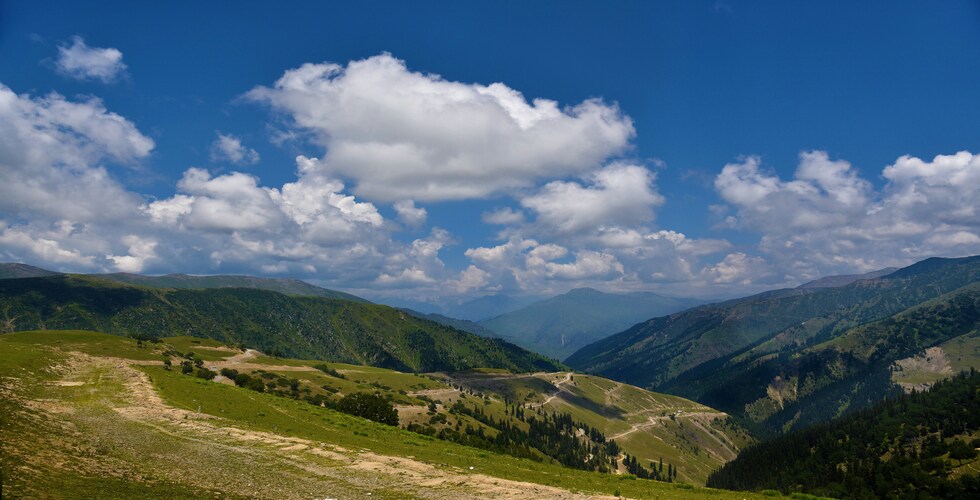
The drive from Srinagar to Dawar is a long one but it will go by in a jiffy. The drive starts upwards from Srinagar and takes you through rich, green meadows to reach the Razdan Pass – a mountain pass which connects the Kashmir Valley to the Gurez Valley. Driving north alongside the Kishanganga river, we pass villages, forests and meadows all surrounded by the stretch of the Himalayan range in the region. 

By late afternoon we should be in Dawar, our trailhead for this trek.  

Day 2

Dawar (2,400M) to Dison (3,150M)

Distance: 5 kms

Duration: 5-6 hours


With a view of the settlements below, we start our first day of trekking. It is a short and easy day, perfect to acquaint us to the region and its terrain. After a few hundred meters of ascent through wide grasslands, we enter the zig-zaggy section of the climb which goes through airy pine forests with an open view of the sky through the canopy. At the end of the forest is a wide meadow which provides for the best views of the Habba Khatoon mountain. This is also the point where the countries divide – with India on the one side and Pakistan on the other.

We have enough time to savour this view because the campsite is only 15 mins away from here.

Day 3

Dison (3,150M) to Khaari (3,445M) via Dawar Heights (3,570M)

Distance: 8 kms

Duration: 6 hours


Today is a relatively longer day distance-wise but the ascent is gradual and hence easy on the legs. We leave from the Dison campsite to go upwards to reach Dawar Heights at 3,570M. The trail is well marked. It is a series of ascents and descents which take us to Patalwansar Pass and eventually bring us to Khaari, our campsite for today.

Day 4

Khaari (3,445M) to Patalwansar I Lake (3,830M) via Patalwansar II (3,900M)

Distance: 8 kms

Duration: 6-7 hours


Day 4, we meet two alpine lakes that share the same name but are very distinct in their form and vibe – one wide and the other long. The trail to these lakes is full of rocks and boulders. We first come to Patalwansar II lake, spend some time by its waters and then head onwards to Patalwansar I Lake. We camp alongside Patalwansar I. The expanse of the landscape today is surreal. We will have enough time to soak it in through the day and spend some quiet time alongside both the lakes.

Day 5

Patalwansar I (3,830M) to Dison (3,150M)

Distance: 12 kms

Duration: 7 hours


Today is a long day but it is all downhill. We give Khaari a miss and go straight down to Dison. The trek should take close to 7 hours on familiar territory.

Day 6

Dison (3,150M) to Dawar (2,400M) Drive to Srinagar (1,580M)

Distance: 4-5 kms trek + 140 kms drive

Duration: 3 hours + 7 hours


On our last day of the trek, we trace our steps back to Dawar, our trailhead, and then drive back to Srinagar. If you are planning to travel out of Srinagar the same day, ensure you book your transport that leaves the city post 9 to account for any delays on the way.

Day 7

Buffer Day

Buffer day is included to account for any changes in schedule or delays due to bad weather or other unforeseeable circumstances. Buffer days, if used, are chargeable.

Day 8

What's Included

  • Veg/ Egg Meals during the trek - Starting evening snacks on Day 1 till Lunch on Day 6
  • Forest Permits/Camping Charges/Permits, Trek Permit Fee/IMF Permission (Upto the amount charged for Indian nationals)
  • Camping tents (Twin sharing), Temp rated sleeping bags, mattress
  • Safety Equipment includes static rescue rope, seat harness, carabiners, pulleys
  • Mountaineering course certified Trek Leader with First Aid certification & customized rescue course from NIM
  • Experienced Local guide, cook, helpers
  • Porters or mules for carrying common luggage
  • Exhaustive First Aid kit including portable oxygen cylinder

What's Not Included

  • Meals during road journeys
  • Any kind of Insurance
  • Any expense of personal nature
  • Any expense not specified in the inclusion list
  • Portage of personal backpack
  • Transportation to and from Srinagar

Are you Eligible for this Adventure?

Easy
3900 m
38 km

BRS Level Required

BRS 3

Gurez Valley Trek is a level 3 adventure on the Bikat Rating Scale.

Packing List

Frequently Asked Questions


The Gurez Valley Trek, at BRS 3, is suitable for both beginners and seasoned trekkers.

If you can Jog/Run for 3 kms in 25-30 mins, you are ready to take on this trek. In addition to this, you can also add resistance workouts to your schedule like squats, lunges, push ups etc.

If you cannot do the above, there’s no need to worry. It is important to remember that it’s all about practice. Get on a training schedule and we can assure you that you will meet these standards in a matter of a few months.

A certain level of fitness and physical endurance are required to take on any high-altitude trail in the Himalayas. Basic knowledge about ascending & descending techniques for mountain trails, how to use a sleeping bag, toilet tents, sleeping tents, and mountain mannerisms will be helpful.

The minimum age limit is 13 years. However, minors between 13 to 17 years of age should be accompanied by their parents/ guardians. If you are above the age of 60, kindly carry a medical certificate from your doctor that deems you fit for adventure activities like trekking.


The Gurez Valley Trek is located in Jammu and Kashmir. This is the only border trek of Kashmir. The valley is accessible from the town of Bandipora in Kashmir.

The Gurez Valley trek offers a unique adventure through one of the most remote and untouched regions of India. Nestled near the Line of Control and being the last valley within the country's borders, it presents a journey off the beaten path, away from mainstream tourist routes. The trek follows an old shepherd trail leading to incomparable views of small habitations, unfamiliar forests, wide grasslands, alpine lakes and all that is unusually beautiful about the Kashmir Valley. Another highlight of the trek is the opportunity to access some of the remotest parts of the valley and interact with the locals in the region – the scope of cultural immersion here is immense.

The trek involves a sudden increase in altitude, rocky and uneven terrain, with steep ascents and descents, and unpredictable weather conditions. Trekkers need to be physically fit and mentally prepared for a strenuous climb.

Like most Kashmir Treks, Gurez Valley trek is at its richest self between June and September.

On all the trekking days we have twin-sharing tents. In case you want an individual tent, you can add that to your booking request for an additional cost.

In the Gurez Valley, temperatures during June, the summer season, typically range from 15°C to 25°C during the day and drop to 5°C to 15°C at night, with occasional showers. In September, during autumn, temperatures range from 10°C to 20°C during the day and 0°C to 10°C at night, with cooler evenings.

Gurez Valley Trek is not considered technically challenging, but it can be physically demanding due to its length and the altitude gain. It involves navigating through varied terrain, including steep ascents, rocky paths, and potentially challenging weather conditions.


The trek of Gurez Valley starts from Dawar. The best way to reach here will be to use a shared taxi or private vehicle. You get a shared taxi from Mundi Bus Stand, Srinagar, to Bandipora. It takes about 2 hours to reach Bandipora. From Bandipora to Dawar, take another shared taxi. It takes about 4 hours to reach Dawar.

There is no mobile reception after Dawar. Even in Dawar, you only get JIO network.

The nearest ATM is located in Dawar which is the starting point for the trek.

We can arrange reserve taxis on request from Srinagar to Dawar and back. Use the "Srinagar to Srinagar" add-on to book the transport with us.

Expect to reach Srinagar by evening between 6 and 7 PM.

Dal Lake: The jewel of Srinagar, the Dal lake is synonymous to a visit to Srinagar and almost a visual definition to the town. Spread over a straggling 26 sq.kms, it is the most photogenic stretch of this paradise on earth and undoubtedly also one of the most sought after of attractions.

Mughal Gardens: Built in the Mughal era, donning its majestic architecture, are the Mughal gardens. The garden is a combination of the Nishat Bagh, Shalimar Gardens & Chashm-e-Shahi. The most prominent feature of the gardens is its long stretches of cascading fountains making this a must see for every traveller.

Nishant Bagh: Laid out in 1633, Nishant Bagh is fondly known as the Garden of Joy. Its beauty is enhanced by the well-manicured landscapes, long avenues of Chinar & cypress trees, rare flowering plants, 12 terraces & several bubbling fountains that cover the whole expanse of the garden.

Shankaracharya Temple: Visit this effulgent, age old temple in Srinagar to feel closer to the gods. Situated at a height of about 1100 feet on the south-east of the city, this sacred temple offers splendid views of the valley and snow-clad mountains of the Pir Panjal range.

Hazratbal: Hazratbal Mosque, situated on the western shore of the pristine Dal Lake, is a sacred Muslim shrine in Hazratbal. Hazratbal's significance is derived from the fact that it houses an heir of the prophet Muhammad, a relic, titled Moi-e-Muqqadas. The relic is only displayed to the public on religious occasions, usually accompanied by colourful fairs afterwards. The shrine commands a grand view of the lake and the mountain beyond, especially when its pristine white marble elegance is reflected in the waters of the lake.


All the common gear like tents, sleeping bags, mattresses etc. are provided. All the technical climbing equipment (as required) are also provided to you. Safety equipment used for rescue is carried by our trek leaders.

You can rent trekking shoes, trekking poles, a fleece jacket and a rucksack from us. In case you have any other requirements, you can talk to our representative and we will be happy to assist you in any way that we can.

You will receive your rented equipment at Dawar, on Day 1.

Our trek leaders will collect the rented equipment from you at the end of the trek on the last day.

For a detailed list, check the Packing List section on this page.

You can buy your essentials in Srinagar. However you will not have sufficient time to do shopping in Srinagar, so do not leave anything for last minute purchases.


Although not recommended, you can off load your bag at an additional cost. Add a request while making your booking for the trek and it can be arranged.

(Note: We don’t recommend offloading because the extra resources on a trail - ponies or porters depending on the trail - means extra load on the environment which can easily be avoided. It also goes against the spirit of trekking by eliminating a level of endurance and discomfort from the experience which are factors at the very heart of an outdoor adventure activity.)


On all trek days, we provide 3 full meals (breakfast, lunch & dinner) in addition to evening snacks and tea. The meals are vegetarian and the menu is pre-decided for all days of the trek. We do provide eggs as well on certain days. If you have any specific food-related allergies or restrictions, you can let our local staff (during the trek) know, and your requests will get accommodated. We try to provide a variety of food across meals so as to avoid repetition as well as cover all nutritional needs.

On campsites, our team will dig dry pits and assemble a toilet tent to provide for safe and secure quarters. A shovel will be provided within the toilet tent as well. Using water in the toilet tent is restricted; you will need to carry your own toilet paper. On the more difficult expeditions, toilet tents are not carried to the higher camps (above base camp) due to restriction of space (to pitch the tent).

In case you get your period on the trail and don’t have sanitary napkins, our trek leaders can provide them to you. If you need any other kind of assistance, you can let our trek leaders know. Irrespective of gender, our leaders are gender sensitised and equipped to assist you in any way you need them to.

Our team carries a first aid kit and all the basic medicines required during the trek. They are equipped to be the first responders in case of any injury or health-related issues. For higher expeditions, we also carry a HAPO Bag and oxygen cylinders to tend to any altitude-related health conditions.

No, we will be camping in the wilderness with no access to electricity.


A copy of your ID Proof and Medical Certificate are the mandatory documents required for this trek. (Soft copies for all of these are to be sent to us & originals should be on your person while on the trek.)

Yes, insurance for any high-altitude activity is highly recommended to cover for the cost of rescue, evacuation and any other emergency service required as well as to cover for medical cost in case of injury or illness during the trek. You can buy it on your own. Alternatively, if you want us to buy it on your behalf, you can speak to our post-booking team and they will arrange it for you. They will send you a payment link once the insurance has been purchased.

Yes, there are multiple permits required for this. We obtain the permits on every trekkers’ behalf. All the permit costs are included in your trek cost.


Yes, you will receive e-certificates (of completion) after the trek. It will bear your name, the trek, and the maximum altitude you achieved on the trek. In case you were unable to finish the trek, you will get a certificate of participation.

On completion of the trek, the certificate will show up on your dashboard on our website. You can download it directly from there.


Gurez Valley Trek is in India. If you are coming from outside, you will need a visa to enter the country. You should be able to find the rules for obtaining a Visa based on your home country on the internet. This information is easily available.

This does not apply to you if you are an Indian citizen. In case you don’t hold an Indian passport, you will need to check online for Visa application rules based on your home country.

If you are not an Indian citizen, you will need Travel Medical Insurance to travel to the country. Please make sure that your insurance policy is valid for the altitude you are going to and the activity you are undertaking, to cover risks during the trek. The insurance policy provided by Bikat Adventures does not cover foreign nationals. So, please do not purchase it while making the booking from our website.

Gurez Valley Trek is located in Kashmir Himalayas. The Himalayas house the tallest mountains in the world and have long been a treasure trove for all adventure enthusiasts. The variety in terms of beauty, terrain, landscape, geography, culture and opportunity for adventure in the Himalayas, remains undisputedly unmatched.

You can make the booking any time depending on availability of slots in our fixed departure batches. You will get this information at the top of this page.


A Basic Mountaineering Course certification from one of the five recognized mountaineering institutes in India is a minimum requirement to join our team. Our field experts are also trained in basic medicine and first-aid response. We also conduct on-ground training for our staff once a year as a refresher for old skills and to learn some new ones. During this training that we call APW (Adventure Professional Workshop), our leaders learn close to 25 topics and techniques of rescue which are not covered in the BMC and AMC courses. For practical training, we simulate on-ground situations to prepare them for quick thinking and quick response during emergencies.

We follow a rigorous regime of hiring and training our experts on the field. Each trek leader is a certified mountaineer with years of experience in the field. The interview process to bring a trek leader on-board is close to 6 months long where we assess various skills as well as personality traits of an individual. They also go through an on-field assignment as part of the hiring process. Trek leaders also progress in time from leading easier treks before advancing to the more difficult ones where the stakes are higher. For detailed information on our selection process, please visit Forerunners - The Making Of A Trek Leader

It absolutely is. We recognize, value and embody the ideology that the world of outdoor adventure can benefit from diversity. We make it our mission to create outdoor spaces as equally accessible and safe for all genders as possible. We also encourage women leaders in the outdoors and all of our staff (irrespective of gender) is gender sensitised. As for accommodation, in case there are no other women on the trek, a solo female trekker is provided with a separate single-occupancy tent.

Our batch sizes for Gurez Valley Trek are capped at 15 with the trek leader to trekker ratio of 1:8.

In addition to their qualification, our trek leaders are trained to tackle any and all kinds of sudden conditions that may present themselves on ground. During our recce stage, we study the trail in great detail and map out rescue routes before opening it up for our trekkers. We also have local support staff stationed in each area to arrange for emergency services at the place of need as quickly as possible.

We mobilise road rescue efforts where our trek leaders bring the person to be rescued down to the trailhead of the trek from where a car can take them to the nearest healthcare facility. The cost of rescue is not covered in the trek fee that we charge. It must be borne by the participant. However, if you opt for the insurance the cost of rescue operations can be claimed from the Insurance company on production of valid proof e.g. doctor’s prescription & hospital bills etc. Please note that Bikat Adventures is only a facilitator & not a party in the Insurance policy. You need to raise the claim request directly with the Insurance company. Bikat Adventures is not responsible for any rejection of claim. You can call the insurance provider directly for any clarifications related to the Insurance policy. Although not mandatory, we recommend buying the insurance. You don’t necessarily have to get the insurance we provide, you can pick an Insurance company of your choice and get a policy directly from them. If you need more information on the terms and conditions of the insurance policy, get in touch with our customer support team.

All the gear used on our treks and expeditions is tried and tested, maintained for good quality and is overall top notch in quality and condition. We are continually looking to obtain the best of everything there is in the market so as to ensure optimum safety.

That will depend on the nature of your medical condition. Do give us a call, and one of our people will help you understand what is best for you. If not this, we are sure there would be plenty of other options you can choose from our vast portfolio to pick as your next adventure.


We have rolling camps on all our trails. To know why we are strictly against the concept of Fixed Camping, read Reasons to Ban Fixed Camping in Himalayas

This is a complex question and has a compound answer. The simple response is that because it is bad for the environment which we dearly love but if you are interested in a more detailed response to this question, please read Reasons to Ban Fixed Camping in Himalayas

There are a number of measures that we take to prevent overcrowding on some of the most popular trails. Some of them are capping our group size at 15, capping the number of trekkers on a trail to 250 per season, constantly looking for newer trails and routes to spread the crowd around and providing incentives to our trekkers to try unexplored territories with us. We put in place the system of dynamic pricing, which is the first of its kind in the trekking industry, which incentivises trekkers to choose less crowded trails by offering higher discounts. We have noticed, since we started this system, that this has helped in a big way to spread out the crowds between trekking routes. We are also going international so as to relieve some of the stress on the Himalayan landscape as well as explore newer ranges and design newer experiences for our community. If you want a more detailed description of all our measures in this regard, please read Simple solutions to overcrowding on Himalayan Treks

Some basic things to remember are: do not use water, do not dispose of anything non-biodegradable inside the pits, carry your own roll of toilet paper and remember to cover up after yourself to leave a clean toilet for your fellow trekkers. Everything else is much the same like using an Indian style home toilet!

Most wet wipes are not biodegradable which means it could take 100 years or more for them to decompose – not the best thing if you are trying to ‘Leave No Trace’, right?

This is quite a tricky situation but not a hopeless one. Since most of our sanitary waste is not biodegradable, we recommend that you pack your pads/tampons neatly, store it in a zip-lock bag and bring it back down with you where there are better options to dispose of them. In case you do not have zip-lock bags, ask our trek leaders for them and they should be able to provide them to you.

Each trekker is responsible for the use and hygiene of their own eating utensils. And as a measure to maintain proper hygiene, we do not provide plates and spoons. Also, dipping your hands in cold water to wash your own utensils adds something to the overall joy of high-altitude living, wouldn’t you think?


On making the payment, you will receive a booking confirmation along with the packing list and a copy of the undertaking form via email. You will subsequently receive emails detailing documents required, how to prepare physically and mentally for the trek, information on pick-up location on the first day etc. Please add [email protected] in your trusted emails list to make sure our emails don't go to your spam folder.

A Whatsapp group will be formed a few weeks before departure. Members from our team are on those groups as well. Feel free to seek any clarifications you require in regards to the trek, on the group itself. Updates related to transportation/pickup point/pickup timing, accommodation etc. will be shared on the Whatsapp group as well.

Yes, we create a Whatsapp group a few weeks before the departure date so that the flow of information remains smooth and transparent.

Yes, it is one of the mandatory documents you will need to submit before the trek starts. The soft copy is to be sent to us & the original should be on your person while on the trek.

Yes, we will provide you an undertaking form through email which will need to be filled up by you and submitted to us post booking.

Why Bikat?

Small Group Size


Our batch sizes are capped at 15 for smaller treks with the trek leader and trekker ratio of 1:8. This ratio, in our years of experience, has proven to deliver the best trekking experience for individuals as well as groups. Capping the size of the group ensures individual attention to each trekker so that no signs of distress or need during the trek go unnoticed. It also helps to form a more cohesive cohort with better group energy which helps define the rhythm and pace of days on the trek.

As you go higher up on the BRS scale, since the stakes are higher, expeditions have an even smaller group size with the ratio of expedition leader to climber set at 1:2.

Qualified Trek Leaders


We follow a rigorous regime of hiring and training our experts in the field. Each trek leader is a certified mountaineer with years of experience in the field. In addition to their qualification, they also go through practical and situational training to tackle any and all kinds of sudden conditions that may present themselves on the ground. Being unpredictable is the core nature of the mountains but being ready for any circumstance as best as possible is a controllable asset that we try to nurture.

Our field experts are also trained in basic medicine and first-aid response.

Watch: Forerunners - The Making of A Trek Leader At Bikat Adventures

Guided Progression


Since Bikat Adventures is a learning-based organization, we help you climb up the ladder of difficulty within the sphere of outdoor adventure systematically. Our on-ground training modules are designed to handhold you through the upskilling process so that you are ready to take on bigger challenges.

Equipment Quality and Check


All the gear used on our treks and expeditions is tried and tested, maintained for good quality, and is overall top-notch in quality and condition. We are continually looking to obtain the best of everything there is in the market so as to ensure optimum safety.

Support Systems


Along with the staff you see on-ground, we have a team of superheroes working in the background to give you the best experience possible. Our background team also comprises local staff from each area who know the region best. Having local support helps with studying the area, pre-planning, execution, and in receiving timely support in case of emergencies in these remote locations.

Communication


Our on-field staff is in constant contact with our teams based in primary locations so as to eliminate any avoidable delay in reaching additional help and support when required. We try to use the best tools for communication available, including satellite phones, in regions where they are not restricted.


What our customers Say

Cancellation Policy


Cash refund

Cancellations up to 60 days prior to departure date

5% deduction

Between 60 days upto 30 days prior to departure date

10% deduction

Between 30 days upto 10 days prior to departure date

50% deduction

Less than 10 days prior to departure date

No Refund

Voucher refund

Cancellations up to 30 days prior to departure date

No Deduction

Between 30 days upto 15 days prior to departure date

15% Deduction

Between 15 days upto 10 days prior to departure date

30% Deduction

Less 10 days prior to departure date

90% Deduction

Please Note:
  1. Cash refund is applicable only in case of bookings made without using any promotional offer code or Cancellation Vouchers or Discounts. "Cash Refund will be processed in 7-14 working days."
  2. This is only a brief of cancellation terms. For finer details please refer Detailed Cancellation Policy.

Blog Posts

Similar Adventures