Gulabi Kantha Trek
Available Batches
Brief Description
Gallery

Brief Itinerary
8 Km
4 Hours
3546m
8 Km
4 Hours
3546m
8 Km
4 Hours
3546m
8 Km
4 Hours
3546m
8 Km
4 Hours
3546m
Detailed Itinerary
Day 1
Dehradun (640 m) to Hanuman Chatti (2,400 m)
Distance: 160 kms (Dehradun to Hanuman Chatti)
Duration: 6-7 Hours
We begin with a scenic drive along the Yamuna River valley. The road winds through Mussoorie’s pine-lined slopes before dropping into the quieter stretches of Uttarkashi district. Hanuman Chatti, a small town at 2,400 m, serves as our first halt and acclimatisation stop. Overnight stay.
Day 2
Hanuman Chatti to Chaani Camp (2,700 m)
Trek Distance: 4 km
Duration: 4-5 Hours
The trek begins with a steady climb through mixed forests of oak, pine, and rhododendron. The trail passes through Nishni village, known for its carved wooden homes and an ancient temple. The day’s destination is Kandola Chhani, a cluster of traditional seasonal huts and fields where locals cultivate beans, millets, and potatoes. Camp overnight in the meadow nearby.
Day 3
Chaani Camp to Seema Thatch (3,474 m)
Trek Distance: 6 km
Duration: 6-7 Hours
The trail steepens as we enter thick oak and maple forests. Rhododendrons line the path in spring, bursting into shades of pink and red. The forest gradually opens into the high-altitude meadow of Seema Thatch. Surrounded by grazing pastures and framed by wide ridgelines, it’s one of the most scenic campsites of the trek. Clear skies here bring unforgettable sunsets and star-lit nights.
Day 4
Seema Thatch to Gulabi Kantha Summit (3,785 m) → Descend to Chaani Camp
Trek Distance: 10 km Total
Duration: 7-8 Hours
We begin early for the short but steep climb to Gulabi Kantha’s summit. The ridge opens up into 360° views of Swargarohini, Bandarpunch, Mt. Jaonli, and the Gangotri Massif. In spring and summer, the meadow glows pink and purple with wildflowers; in winter, it turns into a snow-covered amphitheatre. After soaking in the views, we descend to Kandola Chhani for the night.
Day 5
Chaani Camp to Hanuman Chatti → Drive to Dehradun
Trek Distance: 4 km | Drive Distance: 160km
Duration: Trek - 3 hrs | Drive - 7–8 hrs
The last day is an easy descent back through forest trails to Hanuman Chatti. From here, a drive retraces the Yamuna valley to reach Dehradun by evening, marking the end of the trek.
What's Included
- All meals during the trek, starting with dinner on Day 1 to breakfast on Day 5
- Guest house stay in Hanuman Chatti on Day 1 (sharing basis)
- Forest permits and camping charges (for Indian nationals, up to the standard amount)
- Camping equipment: tents, sleeping bags, mats
- Safety equipment: static rope, harness, carabiners, pulleys, and a first-aid kit
- Services of a certified trek leader
- Support staff: guide, cook, helpers, porters/mules for carrying common equipment
What's Not Included
- Meals during transit (Dehradun ↔ Hanuman Chatti)
- Transportation from Dehradun to Hanuman Chatti and back
- Personal backpack offloading (extra charge if required)
- Any insurance (health, travel, evacuation)
- Personal expenses of any kind (snacks, gear rental, tips, etc.)
- Anything not mentioned in the Inclusions list
Are you Eligible for this Adventure?

BRS Level Required
Packing List
This is the list of essential personal items participants must carry for the trek. It excludes items provided by Bikat Adventures (tents, sleeping bags, mats, safety equipment). All items are essential unless marked optional.
Trekking Gear
Rucksack (50–60L) with rain cover – Qty 1
Day pack (20–30L) for summit day – Recommended
Head torch with spare batteries – Qty 1
UV protection sunglasses – Qty 1 (How to choose sunglasses for trekking)
Water bottles: 2 × 1L (or 1 hydration bladder + 1 bottle)
Footwear
High-ankle trekking shoes with good grip and deep treads – Qty 1
Lightweight sandals/slippers for campsite use – Qty 1
Clothing
Quick-dry trekking pants/track lowers – Qty 2
Full-sleeve T-shirts/trek shirts – 1 for every 2 days of trek
Thermal base layer (upper & lower) – Qty 1
Warm jacket (fleece/down) with closure at wrists & neck – Qty 1
Woollen sweater/light fleece – Qty 1
Rainwear (poncho/jacket & pants) – Qty 1
Woollen socks – 1 pair for every 2 days of trek
Undergarments – Qty 1 per day
Waterproof, insulated gloves – Qty 1
Woollen cap/beanie – Qty 1
Sun hat/cap for daytime – Qty 1
Toiletries
Personal kit (toothbrush, toothpaste, soap, small towel, toilet paper, hand sanitiser, sanitary items if required)
Sunscreen lotion (SPF 30+ small pack)
Lip balm (moisturising, SPF preferred)
Utensils
Lightweight, leak-proof lunch box – Qty 1
Plate – Qty 1
Spoon – Qty 1
Mug (steel/plastic) – Qty 1
Miscellaneous
Personal medicines (consult doctor before trek; carry extra if prescribed)
Energy snacks (dry fruits, nuts, energy bars, chocolates) – Optional
Camera – Optional
Frequently Asked Questions
At BRS 2, Gulabi Kantha is perfect for fit beginners. If you can jog 3 km in 25–30 minutes, you are ready for this trek. Some basic strength training (squats, lunges, push-ups) is recommended to make the experience easier.
You should be able to walk with a loaded backpack for 3–4 hours a day. If you cannot do this yet, start training a few months in advance — it’s all about practice and consistency.
Minimum age is 9 years (minors must be accompanied by a parent/guardian). For trekkers above 60, a medical fitness certificate is required.
Gulabi Kantha is in the Yamuna Valley of Uttarkashi, Uttarakhand. The trek begins from Hanuman Chatti, about 36 km from Barkot.
Walking through dense oak, maple, and rhododendron forests, especially vibrant in spring.
Campsites like Seema Thatch, where sunsets and starry skies are unforgettable.
Meadows that change with the seasons — blooming wildflowers in spring, lush green after the monsoon, and snow-clad in winter.
Passing through traditional villages like Nishni and Kandola Chhani with wooden homes, carved temples, and farm huts.
The summit view of Swargarohini, Bandarpunch, Mt. Jaonli, and the Gangotri Massif in a full 360° panorama.
A trail that is still quiet, uncrowded, and raw compared to other popular Uttarakhand treks.
December to March
On trekking days, we have twin-sharing tents. In case you want an individual tent, you can add that to your booking request for an additional cost.
In the winter months of December to February, the temperature can plummet to sub-zero levels, with daytime temperatures ranging from 0 to 10 degrees Celsius and night temperatures dropping to as low as -10 to -15 degrees Celsius.
No. Gulabi Kantha is a beginner’s trail and demands no technical skills.
The trek starts from Hanuman Chatti, a small village in Uttarkashi district, Uttarakhand. Hanuman Chatti is about 36 km from Barkot and roughly 160 km from Dehradun. It is well-connected by road — you can find shared jeeps and buses running from Dehradun to Barkot, and onwards to Hanuman Chatti.
You will find limited mobile connectivity at Barkot and Hanuman Chatti (mostly BSNL and Jio). Once you leave the roadhead and enter the trail, there is no reliable network for the rest of the trek. This means you’ll be off-grid until you return.
Evening of the fifth day, if things go as scheduled.
If you’re planning to stay back for a day, Dehradun and Mussoorie offer plenty to explore:
Sahastradhara – A natural sulphur spring, often called the “thousand-fold water spring,” believed to have medicinal properties.
Robber’s Cave (Guchhi Pani) – A unique river cave formation and a popular picnic spot.
Tapkeshwar Temple – Situated on the banks of the Asan river, it houses one of the oldest known Shivlings in the region.
Kempty Falls, Mussoorie – A classic hill-station waterfall, ideal for a short excursion.
Lal Tibba, Mussoorie – The highest point in Mussoorie, known for panoramic views of the snow-capped Garhwal Himalayas.
SOHAM Heritage and Art Centre – A museum dedicated to Garhwal and Kumaon art, culture, and history.
All common gear, like tents, sleeping bags, and mattresses, is provided by us. Safety equipment required for emergencies is carried by our trek leaders.
If you do not own any personal gear, you can rent trekking shoes, trekking poles, a fleece jacket, and a rucksack from us. If you need anything else, let us know in advance and we’ll help wherever possible.
Your rented equipment will be issued to you at Hanuman Chatti on Day 1 of the trek. At the end of the trek, our trek leaders will collect it before you return.
For a detailed personal packing checklist, please see the Packing List section on this page.
Yes, backpack offloading can be arranged at an additional cost if requested at the time of booking.
Note: We do not recommend offloading. Extra resources on the trail (mules or porters) increase environmental load and go against the spirit of trekking, where carrying your own pack is part of the challenge and experience.
Yes. You can leave extra luggage safely at the guesthouse in Hanuman Chatti on Day 1. It can be collected when you return at the end of the trek.
On all trek days, we serve three full meals (breakfast, lunch, dinner) along with evening tea/snacks. The food is vegetarian, freshly prepared, and nutritionally balanced. Eggs are served on certain days. If you have allergies or dietary restrictions, inform the trek leader or local staff — we try to accommodate genuine requests.
At campsites, we set up dry pit toilet tents for safe, hygienic use. A shovel is provided in the toilet tent. Water use is restricted; carry your own toilet paper.
If required, our trek leaders can provide sanitary napkins. All trek leaders are gender-sensitised and equipped to assist you discreetly with any such needs.
Our team carries a first-aid kit and basic medicines. Trek leaders are trained as first responders. While Gulabi Kantha is a moderate trek, all safety precautions are in place. For higher expeditions, we also carry HAPO bags and oxygen cylinders, though they are not required on this trek.
You will find charging points at the guesthouse in Hanuman Chatti (Day 1). Beyond the roadhead, there is no electricity on the trail. Carry power banks to keep phones/cameras charged.
A copy of your ID proof and a medical fitness certificate are mandatory for this trek. Soft copies must be submitted to us before departure, and you must carry the originals with you on the trek.
Insurance is not compulsory but is highly recommended for any high-altitude activity. It covers the cost of rescue, evacuation, and medical expenses in case of illness or injury during the trek. You can either purchase it on your own or request us to arrange it for you. If you choose the latter, our team will send you a secure payment link once the policy is issued.
Yes. Trekking in the region requires multiple forest and local permits. These are arranged by us on behalf of all participants, and the cost is already included in your trek fee.
Yes, you will receive e-certificates (of completion) after the trek. It will bear your name, the trek, and the maximum altitude you achieved on the trek. In case you were unable to finish the trek, you will get a certificate of participation.
On completion of the trek, the certificate will show up on your dashboard on our website. You can download it directly from there.
Yes, absolutely. The Gulabi Kantha trek is in Uttarkashi, Uttarakhand, India. If you are coming from outside India, you will need a valid visa to enter the country. Visa application rules vary depending on your home country — please check the official government websites or your local Indian consulate for the most accurate information.
We recommend applying well in advance to avoid last-minute delays. Make sure the validity of your visa begins before the start date of your trek so that you can travel smoothly without any complications.
Yes. If you are not an Indian citizen, you must carry valid travel medical insurance that covers high-altitude trekking in the Himalayas. Please ensure your policy specifically mentions coverage for activities at altitudes up to 4,000 M.
👉 Note: The insurance provided by Bikat Adventures is only valid for Indian nationals. Foreign nationals should purchase their own policy in their home country.
All our trek leaders are certified mountaineers with years of experience in the field. A Basic Mountaineering Course (BMC) is the minimum requirement, but our leaders go through additional in-house training each year at our Adventure Professional Workshop (APW). This covers 25+ rescue and safety techniques that even formal courses don’t touch. Leaders are also trained in basic medicine and first-aid response.
The hiring process is rigorous — spanning almost 6 months of interviews, on-field assignments, and personality assessment. New trek leaders first lead easier treks before progressing to high-stakes expeditions. On top of external certifications, we emphasise practical scenario-based training, so leaders are equipped to make quick, effective decisions in emergencies.
Yes. Outdoor spaces at Bikat are designed to be equally safe and accessible for all genders. Our staff are gender-sensitised, and we actively encourage women trek leaders. In case a woman trekker is the only female participant, she will be provided with a single-occupancy tent at no extra cost.
We cap our batches at 15 trekkers. The trek leader to trekker ratio is maintained at 1:8, ensuring individual attention, safety, and better group dynamics.
We study the trail thoroughly before opening it, mapping out rescue routes in advance. In case of injury or illness, our leaders coordinate road evacuation to the nearest healthcare facility.
Rescue costs are not included in the trek fee, but if you have insurance, these expenses can be reimbursed by your provider.
All gear used on our treks — tents, sleeping bags, ropes, safety equipment — is tried, tested, and maintained to top standards. We continuously update our equipment to ensure maximum safety.
That depends on the condition. Please call us before booking, and our team will advise you on whether this trek is suitable. If not, we’ll help you find another trek from our portfolio that matches your fitness and health profile.
Why Bikat?
Small Group Size
Our batch sizes are capped at 15 for smaller treks with the trek leader and trekker ratio of 1:8. This ratio, in our years of experience, has proven to deliver the best trekking experience for individuals as well as groups. Capping the size of the group ensures individual attention to each trekker so that no signs of distress or need during the trek go unnoticed. It also helps to form a more cohesive cohort with better group energy which helps define the rhythm and pace of days on the trek. As you go higher up on the BRS scale, since the stakes are higher, expeditions have an even smaller group size with the ratio of expedition leader to climber set at 1:2.
Qualified Trek Leaders
We follow a rigorous regime of hiring and training our experts in the field. Each trek leader is a certified mountaineer with years of experience in the field. In addition to their qualification, they also go through practical and situational training to tackle any and all kinds of sudden conditions that may present themselves on the ground. Being unpredictable is the core nature of the mountains but being ready for any circumstance as best as possible is a controllable asset that we try to nurture. Our field experts are also trained in basic medicine and first-aid response. Watch: Forerunners - The Making of A Trek Leader At Bikat Adventures
Guided Progression
Since Bikat Adventures is a learning-based organization, we help you climb up the ladder of difficulty within the sphere of outdoor adventure systematically. Our on-ground training modules are designed to handhold you through the upskilling process so that you are ready to take on bigger challenges.
Equipment Quality and Check
All the gear used on our treks and expeditions is tried and tested, maintained for good quality, and is overall top-notch in quality and condition. We are continually looking to obtain the best of everything there is in the market so as to ensure optimum safety.
Support Systems
Along with the staff you see on-ground, we have a team of superheroes working in the background to give you the best experience possible. Our background team also comprises local staff from each area who know the region best. Having local support helps with studying the area, pre-planning, execution, and in receiving timely support in case of emergencies in these remote locations.
Communication
Our on-field staff is in constant contact with our teams based in primary locations so as to eliminate any avoidable delay in reaching additional help and support when required. We try to use the best tools for communication available, including satellite phones, in regions where they are not restricted.
What our customers Say


Cancellation Policy
Cash refund
Cancellations up to 60 days prior to departure date
Between 60 days upto 30 days prior to departure date
Between 30 days upto 10 days prior to departure date
Less than 10 days prior to departure date
Voucher refund
Cancellations up to 30 days prior to departure date
Between 30 days upto 15 days prior to departure date
Between 15 days upto 10 days prior to departure date
Less 10 days prior to departure date
Please Note:
- Cash refund is applicable only in case of bookings made without using any promotional offer code or Cancellation Vouchers or Discounts. "Cash Refund will be processed in 7-14 working days."
- This is only a brief of cancellation terms. For finer details please refer Detailed Cancellation Policy.
Blog Posts
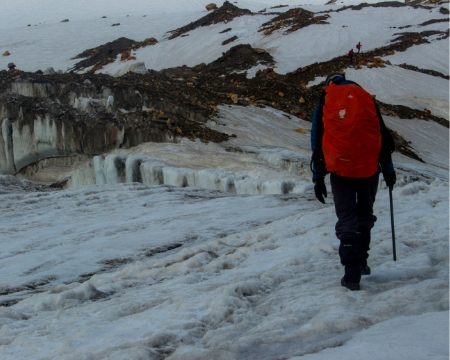
Informative
Trekking In Uttarakhand - A List of 10 Best Treks
Uttarakhand is called the “abode of the Gods” for good reasons.
The Indian state situated west of Nepal is considered to be the epicenter of the great Himalayas. A holy land and a ...
Read full
Similar Adventures
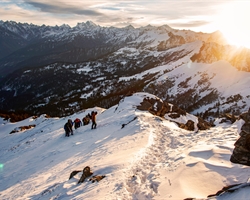
Kedarkantha Trek
The Perfect Summit Trek for Beginners
Uttarakhand
5 Days
BRS 2
3810 m
Dayara Bugyal Trek
A Short Escape for a Long Weekend
Uttarakhand
5 Days
BRS 2
3750 m
Brahmatal Trek
The Best Beginners' Trek in Uttarakhand
Uttarakhand
6 Days
BRS 3
3856 m
Nag Tibba Trek
The Perfect Weekend Getaway
Uttarakhand
3 Days
BRS 1
3004 m